Tuesday, June 22, 2010

Cycling in the Mountains

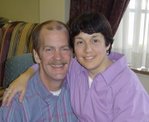
Johnson family reunion--first of two family reunions this summer
Words of uplifting
“Be strong and courageous. Do not be terrified; do not be discouraged, for the Lord your God will be with you wherever you go” (Joshua 1:9).

We’d lived in Japan for less than three months when we took our first bicycle road trip. Young, naive, and still believing that anyone with enough determination can accomplish anything, it never occurred to us that we couldn’t read Japanese (and thus, not a map in Kyushu, the southernmost main island of this country). Perhaps, if we’d thought it through ahead of time, we’d have considered that our lack of language and our hand-drawn (and definitely not-to-scale) map might be less than helpful during this 10-day cycling adventure through the mountains, rice paddies, and pottery villages of northwestern Kyushu. Perhaps this experience set the positive tone for the following 30+ years we’ve lived in Japan. Although we ran out of money before we made it back to Saga, our home and starting point, we discovered the graciousness of the Japanese people doesn’t allow them to turn their backs to needy strangers who appear at their front doors.

Not only did funds challenge us, but the never-ending mountains did, too. I clearly remember one day when it seemed we did little but cycle upwards. Flying down the roads once we’d finally cleared the passes was exhilarating—but this joy was always short-lived. Mostly we strained to keep up enough momentum to continue pedaling and to keep our eyes on that next bend in the road; surely the elusive crest would be just around the corner. But the vista at the turn revealed only that the mountaintop hasn’t been reached yet. Again and again, the next corner became the next goal where usually we discovered another challenging curve to conquer. Was victory even possible?

While he wasn’t on a cycling trip with us in Kyushu, Joshua certainly could have understood our feelings as we battled the mountains, exhaustion, and doubts that our hopes and dreams could be realized. Would he be able to lead the children of Israel to victory? Or would defeat be his legacy?

An update on Cheryl
Today, nearly 35 years later, we’re identifying with all these emotions and questions once again. During the month since we’ve been in the United States for medical leave, we’ve heard, “This medicine isn’t doing what we’d hoped it would” (the second anti-cancer drug), “but there’s another new medicine we can try.” Then, “We don’t think your cancer is metastatic, and surgery could leave you ‘cancer-free.’” Followed by, “This is morbid surgery—very invasive surgery with difficult side effects, including paralysis.”

At the same time, since beginning the new medicine on June 10, Cheryl has been in near-constant pain in her lower abdomen and left flank while also running daily low-grade fevers; she’s experienced dizziness, nausea, and other side effects that she’s not dealt with to date (but no mouth sores!); and general to overwhelming fatigue has become her constant companion. (A blood transfusion in Houston gave her some color once again, but didn’t do anything to restore her energy level.) Needless to say, the questions and doubts have been more evident of late. Thank you for standing with us in prayer and for helping us keep going in the midst of the sometimes confusing array of emotions and questions that we’re confronted with day by day. Please keep praying.

Looking ahead
Currently Cheryl is being seen by a local oncologist for the day-to-day questions and concerns that arise. At the same time, she is a patient at MD Anderson Cancer Center in Houston, where she’ll be seen on August 3-4 for follow-up testing and consultations. The big questions to be answered at that time will be: Has the Votrient (anti-cancer #3) been effective in suppressing or reducing the tumors? Should surgery be scheduled to remove the tumors? If so, when? If the Votrient isn’t working, what should the next step be? Please pray for us to have wisdom in facing these (and other) questions.

But there are some less weighty things we’re also anticipating. We’ll be participating in activities of North American Convention, June 25-30, here in Anderson and look forward to meeting many of our prayer supporters there. We’re also eager to see the debut of In a Besieged City, the 15th in a series of international testimonies books Cheryl has compiled and edited since 1993, as well as publication of the soft-cover edition of Into All the World, first published in hard back in 2009. A Barton family reunion in mid-July and spending the month of July with Stephanie, Donald, Little Ben, and Hosanna will also be joyful and renewing experiences for us. Thanks for your prayers to surround and support us through all our times in Indiana, Missouri, and Texas.

Tuesday, May 18, 2010

A Ridiculous Raincoat


It was a rainy spring day. Everyone I met on my way to the train station was outfitted with umbrellas, rain boots, and raincoats, or some combination thereof. (I didn’t even own an umbrella and rain paraphernalia until we moved to Japan. Walking in the rain is not something anyone would choose to do in the United States. Rather, Americans simply jump in a car and avoid the weather--in the process, getting fat for lack of exercise, I might add).

In any case, my story is about a particular woman I passed who was walking her dog. Nothing unusual about that. After all, dogs must be walked even on rainy days. But wearing an aqua and blue checked raincoat? The dog, I mean, not the woman. Her coat was apricot-colored.

But at least she was walking the dog in the old-fashioned and, in my opinion, correct way. Only weeks ago my heart was warmed by seeing a family of three out for a walk. With his right hand pushing the stroller, the father was holding his little son’s hand in his left. The mother was holding the toddler’s other hand in her right, while also pushing the stroller with her left. I smiled, remembering such walks when our own son was that age. It was a cozy sight.

Until I noticed that the stroller wasn’t empty as it should have been with the not-yet-two-year-old boy walking. Riding inside it was the family’s dog. My smile faded quickly, replaced I’m sure by an incredulous look. The image I’d been enjoying was completely spoiled.

So, as I said, at least the woman in my neighborhood was actually walking her dog that morning, even if it was wearing a ridiculous raincoat. The dog wasn’t riding in a baby stroller or being paraded in its own specially-made-for-doggie pram. They do make them in Japan. In fact, for a mere $250 or so, you can get one near our house at a store called Harness Dog. In the same place, you can also purchase an outfit for poochie fit for the ball. You can also buy your own matching clothes. (And our kids used to roll their eyes when Bernie and I wore matching tee shirts!)

Although I have seen a dog wearing diapers in Jiyugaoka, I didn't see any on display when I walked into Harness Dog—not to admire the merchandise but to get the disturbing facts about how dogs often are treated in Japan. Better than children, I sometimes think. After all, how is it possible to spend such amazing sums of money on dogs, cute as they may be, when children under five years old are starving at the rate of 12 per minute?

“They’re not my children,” some might argue. “If people don’t have the money to raise them properly, they shouldn’t have so many children.” It may be a valid argument, but it doesn’t change the fact that in many countries, children routinely go to bed hungry or gaze listlessly with unseeing, sunken eyes at the world around them—until they die for want of only a small fraction of the food the developed world consumes and/or throws away daily. I simply cannot look the other way.

“From everyone who has been given much, much will be demanded; and from the one who has been entrusted with much, much more will be asked,” Jesus told his followers in Luke 12:48. To ignore is to disobey.

Of course, it’s not enough to scowl at dressed-to-kill dogs carried in their “mothers’” arms on a shopping outing or a visit to a dog cafĂ© to share tea. (This is not an exaggeration.) This is why for more than 30 years we’ve sponsored children through Children of Promise. (Currently we support two girls in India and another in Myanmar.) This Church of God child sponsorship program provides for the daily physical, spiritual, and educational needs of more than 3,800 children in 23 countries of the world. And there are many other excellent sponsorship programs that are also helping to alleviate the plight of destitute children in our world. If everyone would get involved and just do something—and I don’t mean dressing the dog in a ridiculous raincoat and going for a walk.

Saturday, May 8, 2010

When Missions is Spelled ABCs

A colleague as she teaches English to plant seeds for faith in children's hearts

“A missionary is someone who goes to another country to tell people about Jesus.”

This, or some variation of it, is what we usually hear from children in America when we visit their churches and ask if they know what a missionary is. Typically, the places they imagine missionaries go have lions, elephants, zebras, and other wild animals roaming freely, bringing an element of danger into the definition. Just as commonly, children (and many adults as well) also imagine desperately poor people begging for food, their sunken eyes and bony, stick-like frames a testimony to the dire straits in which they barely survive. Missionaries go to their lands and give them food—both the Bread of Life to satisfy spiritually and bread with calories to provide for them physically. This is the work of a “real” missionary.

We’ve been missionaries for more than 30 years and we’ve yet to see a gazelle, rhino, or such animal except in the zoo (although once there was a monkey that came down from Kobe’s Rokko Mountains and into our neighborhood, pausing shortly on our verandah to preen). It’s an entirely different world here in Japan, a nation that refashioned itself from the ashes of World War II into a modern economic miracle. We don’t fight wild animals and muddy, pot-holed roads to go to work—only unbelievably crowded trains and gridlocked highways. Every modern convenience is available at the snap of the fingers. Even the homeless of Tokyo are not gaunt for lack of food.

With Japan as it is today, perhaps some might wonder if there really is work for a missionary here. With less than 1% of Japanese Christian after more than 150 years of Protestant missions, the answer is an obvious yes. But just as obvious is the fact that methodology must fit Japan in the same way that it must fit the needs, culture, and realities of any other location and people anywhere else in the world.

Using English as an outreach tool has been one method of evangelism used successfully in Japan ever since Commodore Matthew Perry of the United States steamed into Shimoda Port on the Izu Peninsula in 1854 and demanded that Japan end its 213-year-old isolationist policy and open up to the West. From that moment onwards—with the exception of the World War II years when English was banned in all schools—teaching English has been one of the most common methods of evangelism employed by missionaries of all church denominations and sending agencies operating throughout the nation. More recently, even classes for babies and their mothers have been employed.

It’s a valid method, too. The woman Bernie baptized recently in Kobe is just one example to illustrate. About three years ago, she joined the English-Bible classes at Tarumi Church. The missionary teacher soon discovered that she had deep questions about the Bible and faith in Jesus Christ. In fact, the woman’s questions were so earnest that the missionary soon encouraged her to step over the line from being an interested spectator to becoming a Christian. (Come to find out, she’d attended such classes at two other churches before moving to Tarumi.) Finally on April 28, after years of English-Bible classes and myriads of questions, the 60-something woman was able to declare publicly her intention to live as a Christian for the rest of her life.

Church English-Bible classes taught by missionaries play an essential role in the journey to faith for many Japanese. Emphasizing building relationships with students more than the fine points of English grammar, these classes aren't the only tool for missions in Japan, but they are one that works. We look forward to playing a role in many more harvest stories that emerge from English-Bible classes in our churches in the future. The ABCs have never seemed so exciting.

Tuesday, April 27, 2010

A Promise for the Family

The cover of Cheryl's 15th international testimonies book,
scheduled for publication in June

Never giving up
[The jailer] then brought [Paul and Silas] out and asked, ‘Sirs, what must I do to be saved?’ They replied, ‘Believe in the Lord Jesus, and you will be saved—you and your household. . . . The jailer brought them into his house and set a meal before them; he was filled with joy because he had come to believe in God—he and his whole family” (Acts 16:30-31, 34, NIV).

How many years would you believe this promise of salvation for your family without seeing some results? We once heard the testimony of a Japanese woman who prayed faithfully for her husband for 50 years before he was saved. We were amazed.

But then on April 25, Bernie had the privilege of baptizing a woman in her mid-60s named Nose-san (Noh-say-sahn). Sitting on the front row of the sanctuary to witness this joyful occasion was her 90-year-old mother (who looked 70 at most). She had prayed for Nose-san’s salvation from her daughter's birth. As the years passed, surely she was tempted to think that her earnest prayers weren’t making any difference. Still she never gave up, and her prayers were answered. Through the English-Bible classes at Tarumi Church—and particularly through conversations with Millie Michael, our special assignment missionary there at the time—Nose-san was finally able to commit her life to the Lord. It might never have happened without her mother’s persistent and believing prayers.

Also present for the celebration was Nose-san’s daughter. Perhaps she’ll be the next person baptized at Tarumi Church as a result of the prayers of mother and grandmother and their belief that Paul and Silas’ words were both for the jailer’s family and for theirs.

An update on Cheryl
We also are never giving up on the power of prayer for Cheryl’s healing from cancer. Thank you for praying with us and for us. We are so grateful that Cheryl was able to begin taking a brand new medicine, Afinitor, on April 20. (The Swiss-made anti-cancer drug only became available in Japan on April 16 and in the United States in March 2009.)

At this point, one week after beginning the daily dosage of Afinitor, Cheryl’s blood test on April 27 was most encouraging. The CRP (C-reactive protein) in her blood—which seems to be an indicator of cancer activity in her body—dropped from a way-too-high 28.29 to 15.85. (Normal is 0 to 0.2.) Additionally, although her hemoglobin count is still quite low, one week of Afinitor has helped it to rise slightly, which may be why Cheryl says she can “smell” energy just around the corner. The three weeks between drugs taxed her body quite significantly, especially her energy level, so it is wonderful to see that the hemoglobin count is on the upswing.

Please do continue praying for us, especially that we will know God’s guidance in the decisions that most likely will face us at M.D. Anderson Cancer Center shortly. Cheryl is scheduled for a consultation with a kidney surgeon on May 26 to hear his opinion about whether or not there is a surgical option for her. Then on June 2, she will have a battery of almost every medical test known to mankind. (Okay, that may be a slight exaggeration, but with tests beginning at 8:15 a.m. and going until after 3 p.m., it seems like every possible test in existence has been scheduled.) The next day, on June 3, Bernie and Cheryl will meet with her kidney cancer specialist to discuss all related consultations and test findings to determine the best course of action onwards. No doubt our heads will be spinning with the volume of information that comes our way. Truly we need God’s wisdom in order to know which way he is leading us. Thank you for your continued and faithful prayers.

Additional prayer requests
●Pray for the Holy Spirit to touch hearts during the three special Bible camps for Tamagawa Seigakuin students between May 12-14.
●Please pray for Pastor Fujiwara as she teaches Bernie’s Bible classes at Tamagawa Seigakuin while the Bartons are on medical leave from May 19-August 19. Pray also for Fujiwara-sensei as she carries full responsibility for Tamagawa Church in our absence.
●Pray for the new special assignment missionary couple who will come to Japan on August 19 to begin their new assignments at Tamagawa Seigakuin and Tamagawa Church. In the space of the next few weeks, they will be graduating from university, getting married, taking an on line course in TOEFL (teaching of English as a foreign language), applying with the Japanese government for certification to receive their visas, and more. Needless to say, they have much on their plates and would appreciate your prayer.
●Pray for the successful and on-time publication of In a Besieged City, the 15th in a series of international testimonies books Cheryl has compiled and edited since 1993. (On time means in plenty of time for its debut at North American Convention in late June.)

We are so thankful for your prayers!

Thursday, April 15, 2010

For This I Have Jesus

God's words to me in the desert,
"Be strong and courageous. Do not be terrified;
do not be discouraged, for the Lord your God will be with you
wherever you go" (Joshua 1:9).

If I were caught up on my daily Bible readings, I wouldn’t have encountered today’s passage from Psalm 66:1-15. (I should have read this more than a week ago.) But because I am behind, I read verses about praising God and telling others of all he has done for me. It was exactly what I needed. Instead of dwelling in the land of no motivation, no energy, no enthusiasm, and a whole bunch of other negatives, I was reminded again this morning that the key to unlocking the door of this cruel prison that has ensnared me is to focus not on cancer (nor on yet another gray, rainy day) but on praising God for who he is.

The accompanying devotional piece was not lengthy—only five very short paragraphs—but they packed a tremendously powerful punch at the very place where my heart struggles more than I wish: fear, doubt, and negativity. The writer told of an evangelistic meeting in Ireland where the speaker was explaining about abiding in Christ and trusting him completely and unconditionally, no matter the circumstance. My reading speed slowed immediately so that I could drink deeply of the words I needed as much as a thirsty, exhausted traveler craves water in the desert. I was especially drawn to the speaker’s concluding thought in his message about how abiding and trusting in Jesus “means that in every circumstance you can keep on saying, ‘For this I have Jesus.’”

Some people think seeking Jesus in difficult times means that they themselves are weak. (And who likes to be weak and vulnerable?) But Jesus tried to correct such a mistaken idea by saying, “It is not the healthy who need a doctor, but the sick” (Matthew 9:12). In other words, when we recognize and admit our sickness—physical, emotional, and/or spiritual—we are blessed because we know where we can find help. Reassured and comforted, our hearts resound, “For this I have Jesus.”

In my case, I am coughing (again), running a fever daily (I’m so thankful for my friend who brought me 1,500 tablets of Ibuprofen from the States), lagging in energy and “get up and go” (as my mother would say), and generally feeling quite distant from the me I used to know and be. I’m also waiting on delivery of my new anti-cancer drug, Afinitor, debuting this month in Japan. I’m in my third week between drugs, and I’ve never been good at waiting for anything, especially something that has “life or death” written into the equation. It’s hard to keep my thoughts from running ahead of what I know (I need this new medicine and I’ll get it on April 20) and what I only conjecture whenever I feel a small twinge of pain (cancer is taking over my body).

But in all of this I remember, “For this I have Jesus.” And I rejoice in God’s faithfulness in the midst of this now one-year-old cancer journey. How could I walk it alone? I'm so grateful that I don’t have to.